
Wireless technology is evolving faster than ever. While Wi-Fi 6 and Wi-Fi 6E are now widely deployed, Wi-Fi 7 (802.11be) is already entering commercial environments, promising multi-gigabit throughput, ultra-low latency, and higher device density. However, many network upgrades fail to deliver expected performance—not because of access points, but because the underlying cabling infrastructure was never designed to support next-generation wireless demands.
Future-proofing network cabling means building a physical layer that can support not only today’s requirements, but also the performance, power, and scalability needs of the next 10–15 years.
Why Cabling Matters More in the Wi-Fi 6/7 Era
Modern Wi-Fi access points are no longer low-bandwidth devices. A single Wi-Fi 6 or Wi-Fi 7 AP can require:
-
2.5G / 5G / 10G Ethernet uplinks
-
Improved resistance to electromagnetic interference
-
Stable performance in high-density environments
Legacy Cat5e or poorly installed Cat6 cabling often becomes the bottleneck, limiting throughput and causing intermittent performance issues that are difficult to diagnose.
Choosing the Right Cabling for Long-Term Scalability
Cat6 vs Cat6A
While Cat6 can support 2.5G and 5G Ethernet at short distances, Cat6A is the preferred choice for future-ready deployments. It supports 10G Ethernet up to 100 meters and provides better alien crosstalk performance—critical for dense cable bundles in enterprise and data center environments.
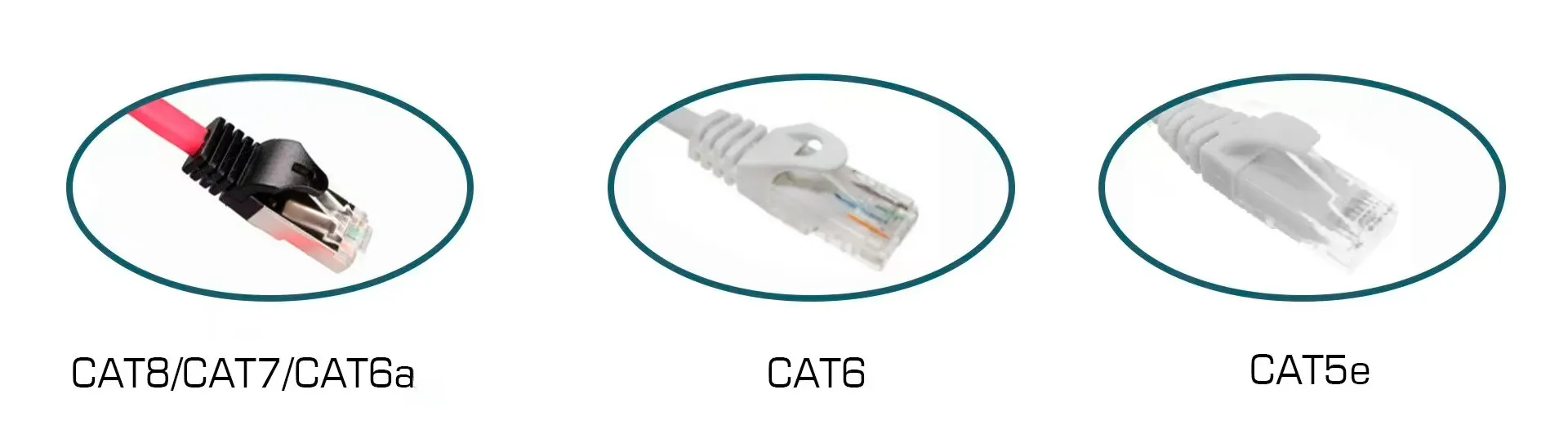
Shielded vs Unshielded Cables
As data rates increase, shielding becomes more important. F/UTP or S/FTP cables offer improved noise immunity, especially in environments with electrical equipment, LED lighting, or industrial machinery.
PoE and Power Considerations
Wi-Fi 7 access points often require higher power budgets to support advanced radios and features. Cabling must be capable of handling increased current without excessive heat buildup. High-quality conductors, proper cable gauge, and certified PoE-rated components are essential to avoid long-term reliability issues.

Structured Cabling Design Best Practices
Future-proofing is not only about cable category—it also involves design strategy:
-
Maintain conservative cable lengths to allow headroom for higher speeds
-
Use modular patch panels and organized cable management
-
Plan for additional AP density in ceilings and public areas
-
Label and document cabling for easier upgrades and troubleshooting
A well-designed structured cabling system reduces upgrade costs and minimizes downtime as wireless standards evolve.
Conclusion
Although Wi-Fi 7 is still being deployed, future standards will continue pushing bandwidth and power requirements higher. Investing in higher-grade cabling today helps organizations avoid costly re-cabling projects later and ensures compatibility with emerging technologies such as IoT expansion, edge computing, and AI-driven applications.
Frequently Asked Questions
Q: Is Cat6 still enough for Wi-Fi 6 or Wi-Fi 7?
A: Cat6 can support Wi-Fi 6 in many scenarios, but Cat6A is strongly recommended for Wi-Fi 6E and Wi-Fi 7 to ensure full performance and long-term scalability.
Q:Do Wi-Fi access points really need 10G Ethernet?
A:Not all APs require 10G today, but many high-end Wi-Fi 7 access points already support it. Installing 10G-ready cabling avoids future limitations.
Q:Why is PoE important for future wireless networks?
A: Higher-generation access points consume more power. Cabling must safely support PoE+ and PoE++ to prevent overheating and power loss.
Q:Should I use shielded cables for enterprise Wi-Fi deployments?
A:In high-density or high-interference environments, shielded cables provide better signal stability and long-term reliability.

 English
  Spanish
  Arabic
  Portuguese