
Why Interconnect Choice Matters in Data Centers
With the rapid adoption of 25G, 40G, 100G, and higher-speed networks, data center interconnects are no longer just passive components. Cable type directly affects signal integrity, power consumption, airflow management, and long-term scalability. Choosing the wrong interconnect can lead to unnecessary costs, limited upgrade paths, or operational inefficiencies.
Traditional Copper Cables: Familiar but Limited
Traditional copper cables transmit electrical signals through metal conductors and have long been the foundation of network infrastructure. They are simple, affordable, and widely supported across networking equipment.
However, as data rates increase, copper cables face challenges such as higher signal loss, susceptibility to electromagnetic interference, and increased heat generation. While copper remains useful for legacy systems and lower-speed links, it becomes less practical for high-density, high-speed data center environments.
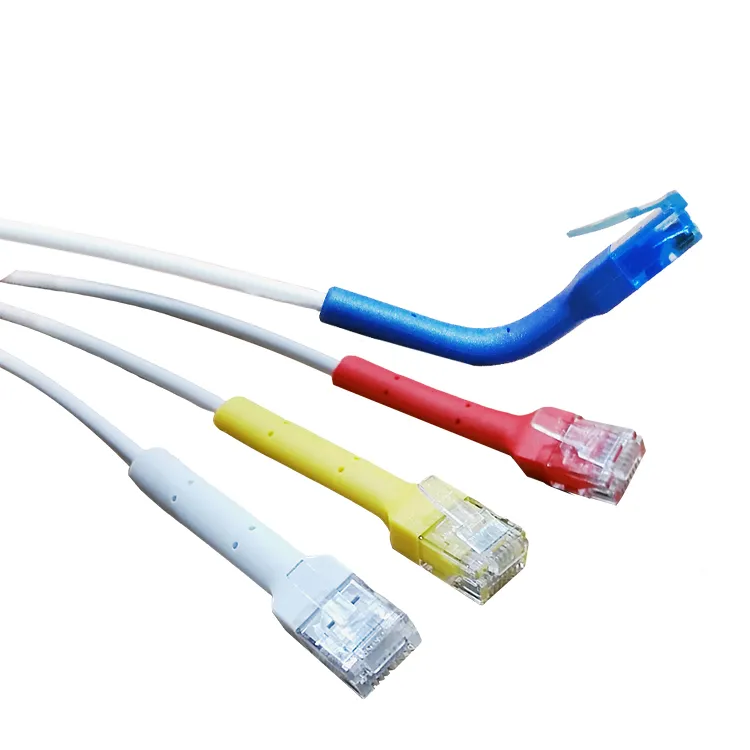
Direct Attach Cables (DAC): Optimized for Short Reach
DAC cables integrate copper conductors with fixed transceivers on both ends. This design eliminates the need for separate optical modules and simplifies short-distance connections between servers and switches.
DAC is commonly used inside racks or between adjacent racks where distances are minimal. Its main advantages include very low latency, low power consumption, and cost efficiency. However, DAC cables are generally limited to short lengths, making them unsuitable for larger data center layouts.
Active Optical Cables (AOC): Extending Reach with Optical Performance
AOC cables combine the convenience of a plug-and-play form factor with the performance benefits of optical fiber. Electrical signals are converted to optical signals within the connectors, allowing data to travel longer distances without degradation.
AOC offers excellent resistance to interference, lighter cable weight, and improved cable management. These characteristics make AOC well suited for inter-rack connections and environments where distance, flexibility, and signal stability are critical considerations.
Comparing AOC, DAC, and Copper at a Glance
When comparing these interconnect options, several factors stand out:
-
Distance: Copper supports shorter distances at high speeds, DAC is limited to very short runs, while AOC supports much longer links.
-
Latency: DAC provides the lowest latency, followed closely by AOC, with traditional copper varying by application.
-
Power Consumption: DAC consumes the least power, while AOC requires additional power for optical conversion.
-
Installation and Management: AOC’s lighter weight and flexibility improve airflow and simplify cable routing.
-
Cost: Copper and DAC are more economical for short distances, while AOC offers better value as distance increases.

Conclusion
There is no single best solution for all data centers. Instead, selection should be based on deployment needs:
-
Use traditional copper cables for low-speed or legacy connections.
-
Choose DAC for short, high-density connections where cost and latency are top priorities.
-
Select AOC for longer distances, cleaner cable management, and environments with high electromagnetic interference.
By aligning cable choice with application requirements, data center operators can achieve a balance between performance, cost, and scalability.
Frequently Asked Questions
Q: When should I choose AOC instead of DAC?
A: AOC is the better choice when link distances exceed the practical limits of DAC or when improved signal stability and cable flexibility are required.
Q:Are DAC cables cheaper than AOC cables?
A:Yes. DAC cables are generally more cost-effective for short distances because they do not require optical components.
Q: Do AOC cables generate more heat than DAC?
A: AOC cables consume slightly more power due to optical conversion, but modern designs minimize heat impact in data center deployments.
Q: Which interconnect is best for future data center upgrades?
A:AOC offers greater flexibility for future upgrades, especially when higher speeds and longer distances are anticipated.
Q: Can traditional copper cables support high-speed data center networks?
A: They can support lower-speed or short-range connections, but they are not ideal for high-speed, high-density data center environments.

 English
  Spanish
  Arabic
  Portuguese