
What is a Fiber Connector?
Fiber optic connector is a field terminal connector used to achieve fiber optic termination, typically used to connect two optical fibers where they need to be connected, allowing for continuous optical signals. They have a wide range of types and structures, are widely used in various fields of fiber optic communication and transmission.

Features of Fibre Connectors
- High bandwidth transmission
- Low-loss transmission
- Long-distance transmission
- Low insertion loss
- High stability & reliability
- Low interference and anti-interference ability
- Miniaturized design
- Safety
Main Fiber Connectors Types
Different applications require different fibre connectors to ensure compatibility and efficiency. Currently, there are more than 100 types of fiber optic connectors on the market, and we will introduce the 9 most popular connectors.
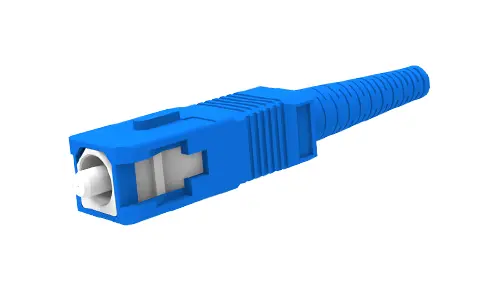
SC Connector
Ferrule Size: Φ2.5mm
Feature: square connector, push-pull latching
Available Fiber Mode: single-mode, multimode
Pros:
Simple installation, stable connection
Durable, can withstand frequent connections and disconnections
Low insertion loss
Cons: larger than LC, occupy more space
Application: used in data communication and telecommunications fields such as Lans, Wan, and FTTH
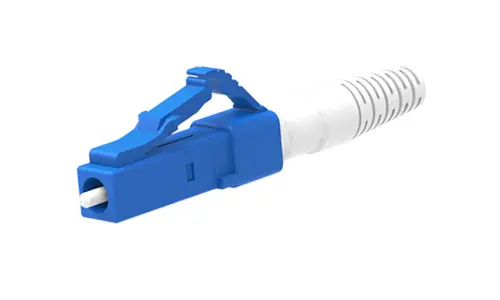
LC Connector
Ferrule Size: Φ1.25mm
Feature: small form factor square connector, push-pull connector with clip-locking
Available Fiber Mode: single-mode, multimode
Pros:
Small size, suitable for high-density applications
Low insertion loss
Cons: connection operation is slightly more complicated than SC
Application: used in high-density applications such as data centers, enterprise networks, Lans, and other scenarios that require compact connectors
FC Connector
Ferrule Size: Φ2.5mm
Feature: round connector, metal screw threaded connection
Available Fiber Mode: single-mode, multimode
Pros:
Stable and reliable connection
Low insertion loss
Cons: connection and disconnection operations are relatively complicated
Application: commonly used in single-mode optical fiber applications, such as long-distance transmission, telecommunications networks, and high-speed networks.

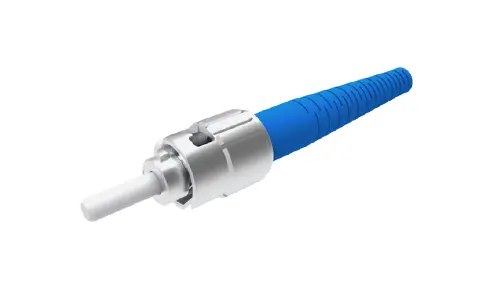
ST Connector
Ferrule Size: Φ2.5mm
Feature: round connector, half-twist bayonet-style lock
Available Fiber Mode: single-mode, multimode
Pros:
Stable and reliable connection
Suitable for coarse diameter fiber
Cons: connection operation is relatively complicated, higher insertion loss
Application: commonly used in multi-mode optical fiber application environments, such as Lans, computer networks
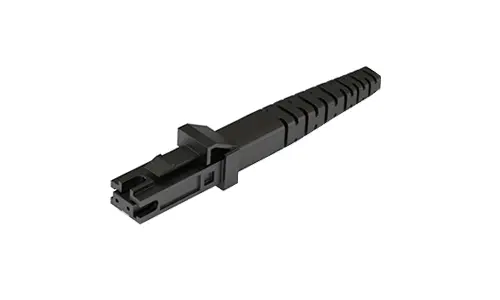
MT-RJ Connector
Feature: duplex connector, tubular locking, use pins for alignment
Available Fiber Mode: single-mode, multimode
Pros:
Integrate optical fiber transmission and connection functions in one
Small size, suitable for high-density applications
Dual-core fiber connections
Cons: higher insertion loss, connection stability is relatively poor
Application: used in high-density applications such as data centers, Lans, and FTTH
MPO / MTP Connector
Feature: multi-fiber connector, male and female connector, push / pull latch
Available Fiber Mode: single-mode, multimode
Pros:
Suitable for high-density fiber optic connections
Low insertion loss
Cons: the cost is higher than other connectors, the connection operation is relatively complex
Application: used for high-density optical fiber connections, such as data centers, fibre channels, and high-speed networks that require large-capacity transmission

MU Connector
Ferrule Size: Φ1.25mm
Feature: miniature connectors with push-pull design
Available Fiber Mode: single-mode, multimode
Pros: Small size, suitable for high-density fiber optic connections
Cons: the insertion and removal operations are slightly more complex
Application: used in the fields of data communication and telecommunications, suitable for applications that require high-end data transmission and dense connections, such as data centers and high-speed networks

DIN Connector
Ferrule Size: Φ2.5mm
Feature: round connector, threaded connections
Available Fiber Mode: single-mode, multimode
Pros:
Stable and reliable connection
Low insertion loss
Cons: the insertion and removal operations are more complex
Application: commonly used in single-mode fiber optic application environments, such as long-distance transmission and telecommunications networks

E2000 Connector
Ferrule Size: Φ2.5mm
Feature: connector with a protective cover
Available Fiber Mode: single-mode, multimode
Pros:
High fiber optic protection
Stable and reliable connection
Cons: the cost is higher than other connectors
Application: used in applications that require high protection of optical fibers, such as high-precision measurement, medical equipment, and high-speed communication systems

Polish Types of Fiber Optic Connector
Fiber optical connectors have different polish types, which affects the return loss of the connectors. The optical signal will be severely attenuated after the connection of different polish types of connectors, resulting in link failure.
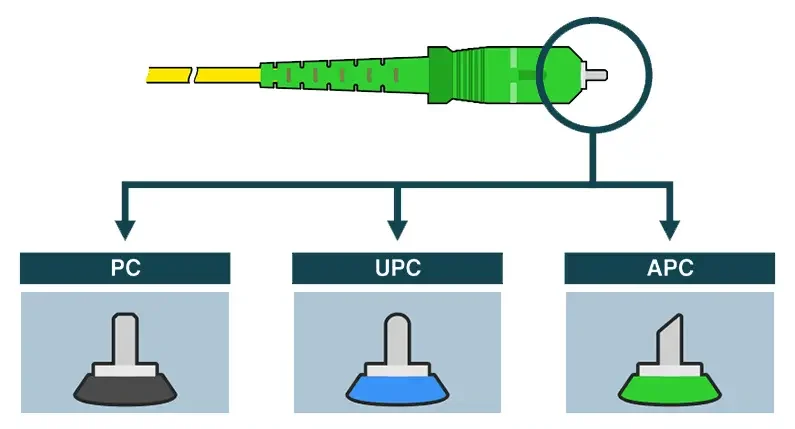
PC ( Physical Contact )
The surface of the PC fibre connector ferrule is ground into a slightly spherical surface, and the optical fiber core is at the highest bend point. This can effectively reduce the air gap between the optical fiber components, so that the two optical fiber ends reach physical contact.
PC polishing type is available for single-mode and multimode fiber optic connectors and can guarantee a return loss of -40dB, but its application has become less and less common.
UPC ( Ultra Physical Contact )
UPC fiber optic connector optimizes the end face polishing and surface finish on the basis of PC, making the end face appear more domed to achieve more precise docking.
UPC polished type is suitable for single-mode and multimode fiber connectors, and its return loss is superior to the PC type, reaching -55dB.
APC ( Angled Physical Contact )
The end face of APC fiber connectors is usually ground to an 8 ° angle, minimizing back light reflection and providing better connectivity performance.
APC polished type is only available for single-mode fiber connectors, and its return loss is superior to other two types, reaching -60dB.
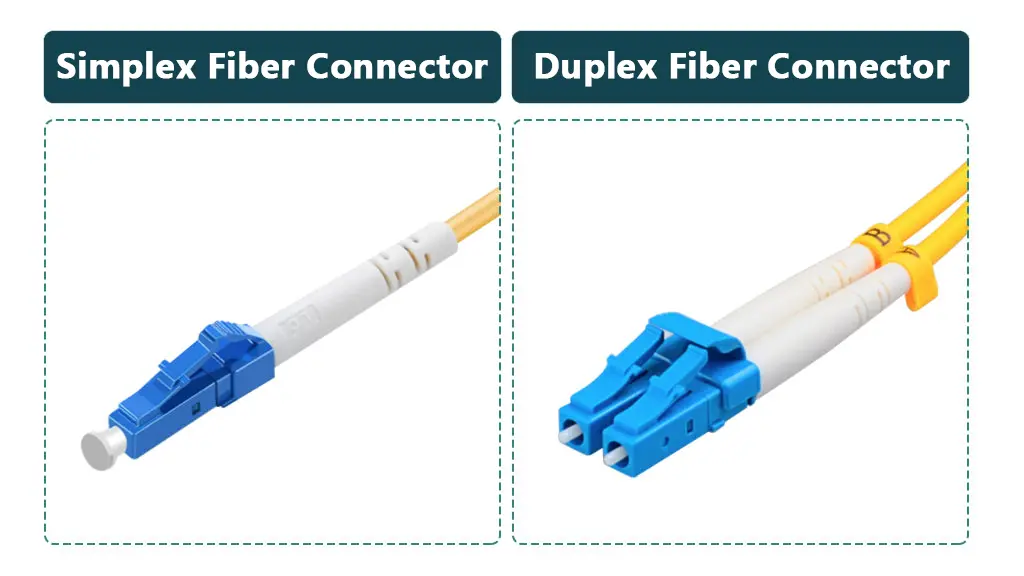
Simplex vs Duplex
Simplex optical connectors are usually connected to one optical fiber, simplex connection refers to the transmission of information in one direction, with one end being the transmitter and the other end being the receiver, without reversibility.
Duplex fiber connectors are connected to two fibers. Duplex connection can perform bidirectional information transmission, receiving data while sending it.
Gcabling Fiber Optic Connectors
Standard Fibre Optic Connectors
-

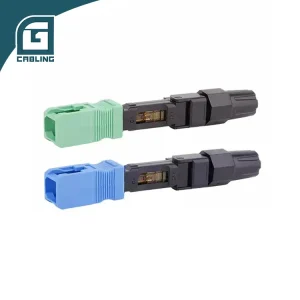
Gcabling SC UPC Fiber Optic Connector Singlemode APC Pre-polished Fiber Fast Connector
$0.99 -
Gcabling LC APC UPC Fiber Connector Pre-polished SM Fiber Optical Fast Connector for 2.0*3.0mm Cable
Rango de precios: desde $2.49 hasta $2.59 -
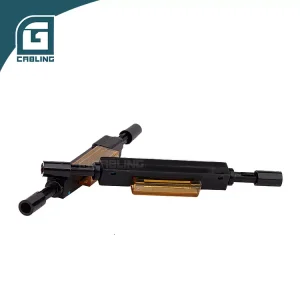
Gcabling SM Fiber Connector Fiber Mechanical Splicing Connector for 0.25mm 0.9mm Fiber Wire
$3.99

Customize Your Network Cabinet
If our standard fiber ends cannot meet the demand, we can do OEM / ODM according to your specifications.

 Spanish
  English
  Arabic
  Portuguese