
PoE Standards: PoE, PoE+, and PoE++ Explained
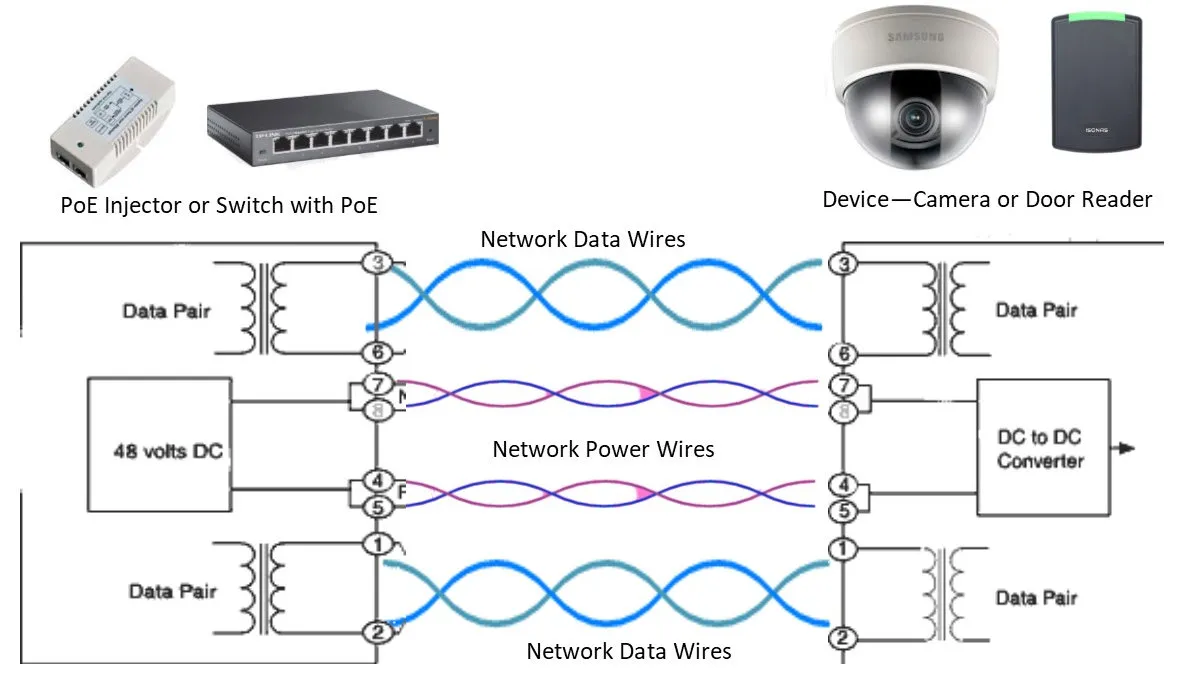
Power over Ethernet (PoE) has revolutionized modern networking by allowing devices to receive both data and power through a single Ethernet cable. But with multiple PoE standards available, it’s essential to understand the differences before planning your installation.
PoE (IEEE 802.3af): The Original Standard
Introduced in 2003, IEEE 802.3af was the foundation of Power over Ethernet (PoE) technology — enabling both data and power to be transmitted over a single Ethernet cable.This innovation simplified installation and reduced costs by eliminating the need for separate electrical wiring.
The PoE standard delivers up to 15.4W per port, with around 12.95W of usable power at the device end after accounting for power loss along the cable.This makes it a practical and reliable choice for powering low-consumption network devices, including:
-
IP phones and VoIP systems
-
Fixed IP surveillance cameras
-
Entry-level wireless access points
-
Network sensors or small controllers
Despite being the earliest version, PoE (802.3af) still plays a key role in modern networks where energy efficiency and simplicity matter most.For small business offices, home automation setups, and compact monitoring systems, it remains a cost-efficient and dependable power delivery solution.
PoE+ (IEEE 802.3at): More Power, More Possibilities
Introduced in 2009, PoE+ (IEEE 802.3at) built upon the foundation of the original PoE standard, delivering double the power — up to 30W per port, with approximately 25.5W of usable power at the device end.
This enhancement opened the door for a broader range of devices that require more energy to operate efficiently while still benefiting from a single-cable connection.
PoE+ is ideal for medium-power devices, such as:
-
Dual-band Wi-Fi 5 and Wi-Fi 6 access points
-
Thin client terminals or small form-factor PCs
-
Video conferencing systems and smart displays
-
Advanced VoIP phones with color touchscreens
By providing higher wattage, PoE+ allows businesses to expand their network infrastructure without needing to install additional power outlets — greatly simplifying setup in commercial buildings.
PoE++ (IEEE 802.3bt): Built for Smart Networks
As modern networks evolve toward higher performance, the demand for more power and efficiency has led to the development of PoE++ (IEEE 802.3bt) — also known as 4PPoE (Four-Pair Power over Ethernet).Unlike its predecessors, PoE++ utilizes all four twisted pairs within the Ethernet cable to deliver significantly higher wattage,up to 60W for Type 3 and 90–100W for Type 4 per port.
PoE++ is ideal for powering next-generation smart systems, such as:
-
Wi-Fi 6 and Wi-Fi 6E access points that require higher throughput and stability
-
High-performance PTZ or multi-lens security cameras with advanced analytics
-
LED lighting systems and IoT-powered lighting control solutions
-
Interactive digital signage, kiosks, and POS terminals
Beyond raw power, PoE++ enhances energy efficiency by intelligently managing power allocation across connected devices. This makes it an essential standard for smart buildings, industrial automation, and integrated data networks.It simplifies installation, reduces cabling complexity, and supports the growing convergence between IT and building management systems
Key Comparison
| Estándar | Power Output | Ideal For |
|---|---|---|
| PoE (802.3af) | 15.4W | VoIP, basic IP cameras |
| PoE+ (802.3at) | 30W | PTZ cameras, Wi-Fi 5 APs |
| PoE++ (802.3bt) | 60–100W | Wi-Fi 6/LED/digital signage |
How to Choose the Right Standard
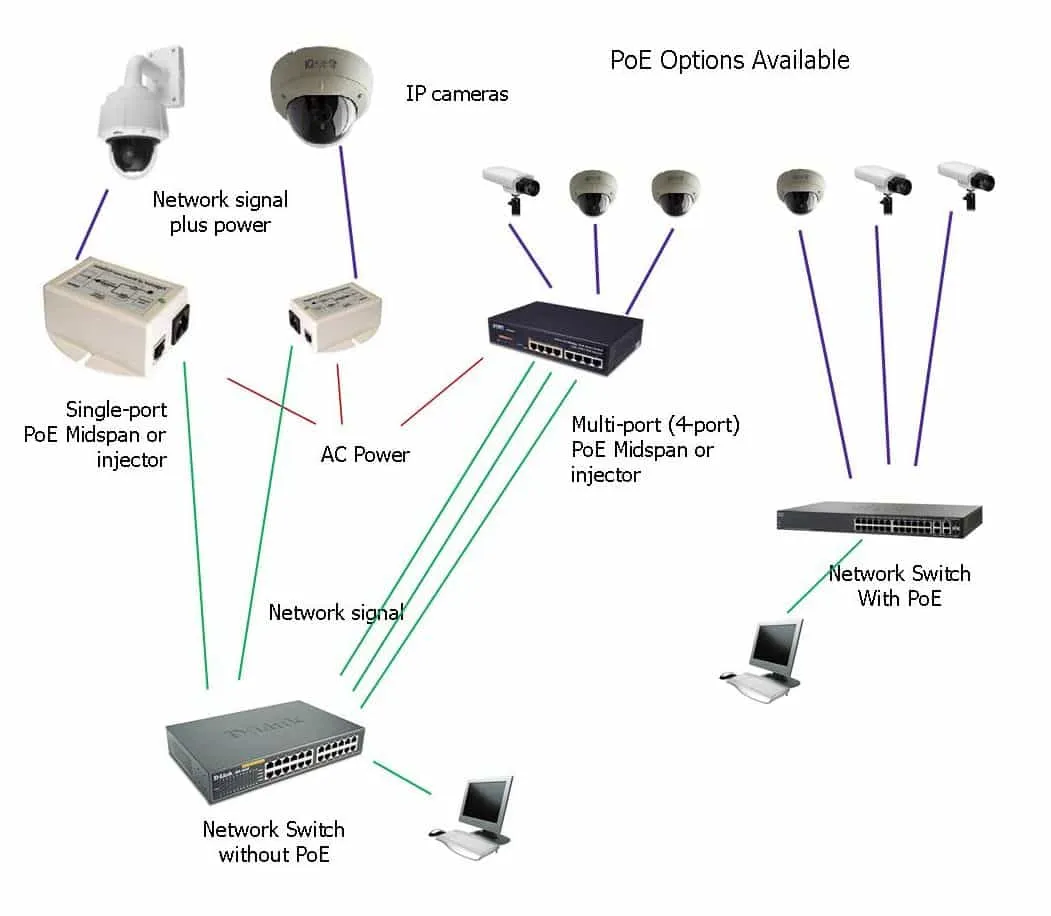
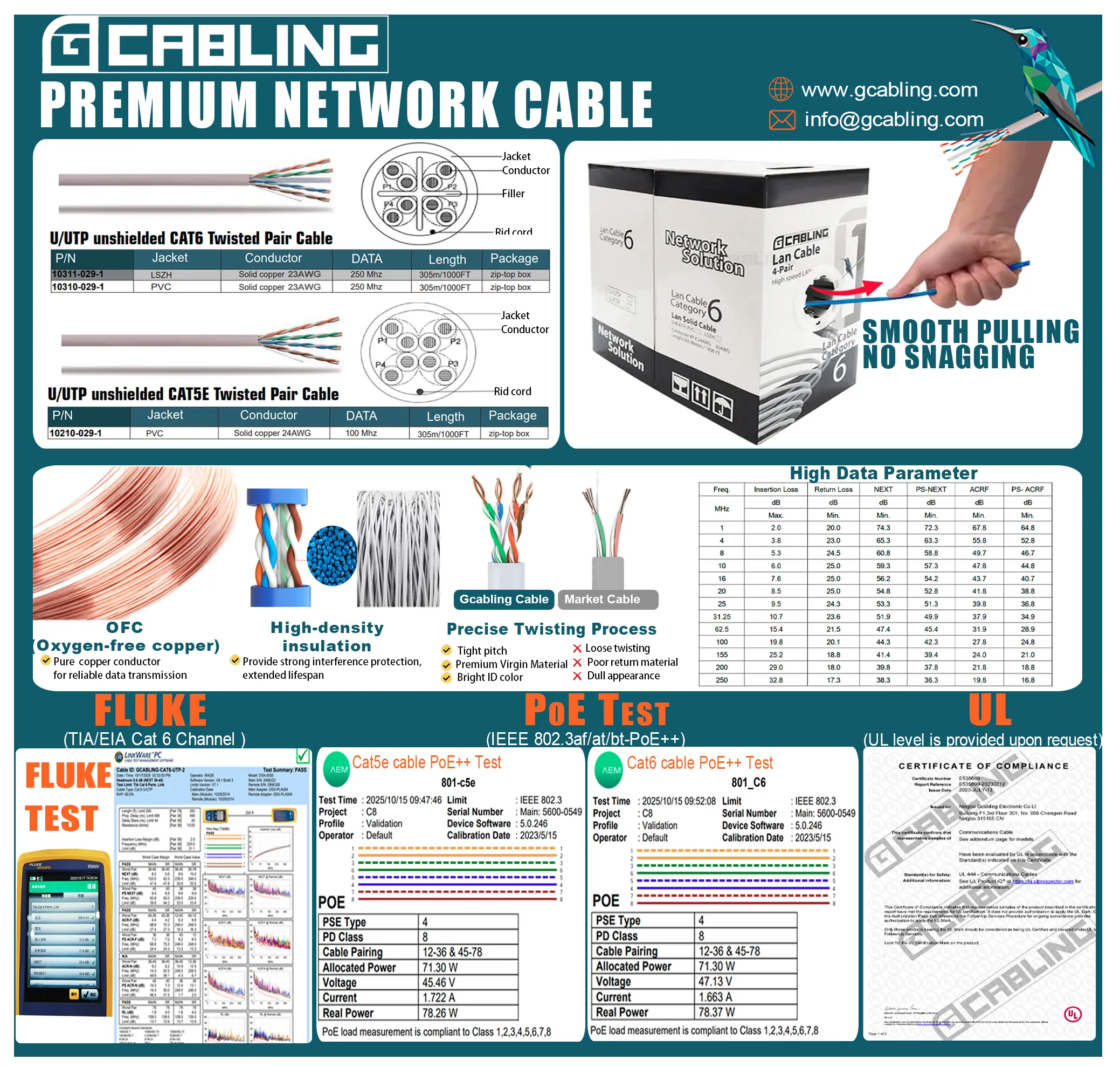
When designing your PoE network, it’s essential to match power requirements across all devices.Start by evaluating the total power draw of your endpoints — such as IP cameras, access points, or VoIP phones — and ensure your PoE switch or injector delivers sufficient wattage.
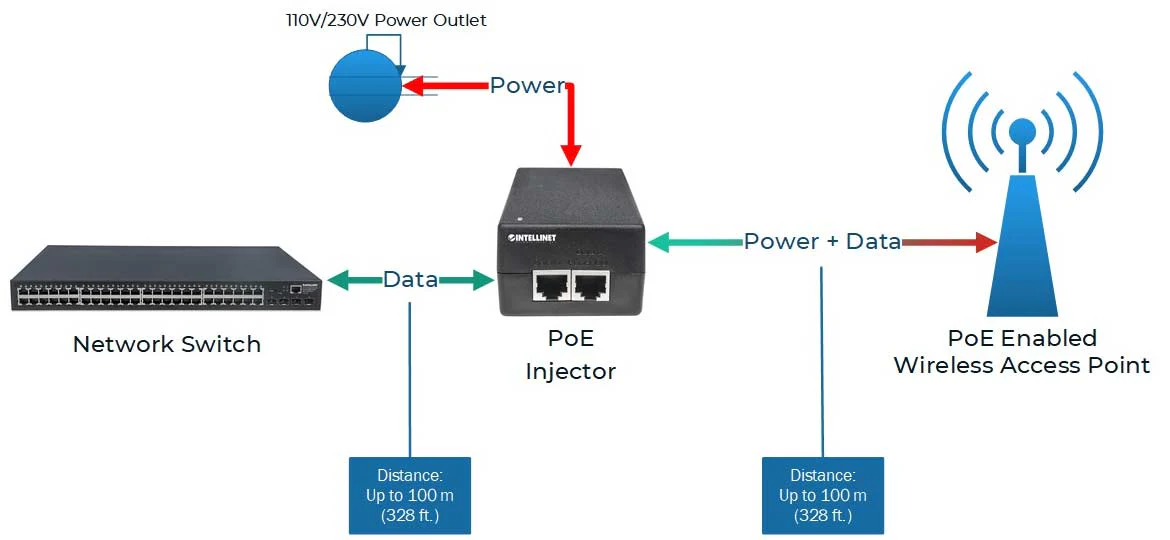
Next, use high-quality Ethernet cables with OFC (Oxygen-Free Copper) conductors. Poor-quality or CCA cables can cause voltage drops, heat buildup, and unstable power delivery especially under PoE+ loads.
Finally, verify compatibility between your switches, PDUs, and powered devices with the targeted PoE standard (IEEE 802.3af/at/bt).A well-balanced setup ensures efficient data transmission, consistent power output, and long-term system reliability — the foundation of every professional network.
Why Gcabling Is the Smart Choice for PoE Networks
Gcabling CAT6 and CAT5e network cables are Fluke-tested and TIA/EIA Cat 6 certified to guarantee stable PoE++ (IEEE 802.3bt) performance.
With pure oxygen-free copper conductors, precise twisting, and high-density insulation, they minimize resistance and signal loss, ensuring cooler operation, higher efficiency, and longer cable lifespan for your intelligent network setups.
✔ PoE / PoE+ / PoE++ compatible,UL certified
✔ OFC Pure copper core for stable current
✔ High-density PE insulation
✔ Smooth Pulling , No Snagging

 Spanish
  English
  Arabic
  Portuguese